The Future of PA-ADOPT

Two people shaking hands over a table

Back in October 2020, the concept of what eventually became PA-ADOPT was starting to be discussed around West Chester University’s Office of Digital Learning & Innovation (now the Teaching & Learning Center) and the Office of Research & Sponsored Programs. The idea to bring four Pennsylvania state system universities together to apply for a U.S. Department of Education (DOE) grant aimed at creating free and open electronic textbooks was an ambitious one, but having already established an eTextbook program for faculty that had been successfully generating books for four years, we liked our chances.

Fast-forward six years later, we have 22 new eTextbooks from a variety of STEM and Writing fields thanks to the DOE’s Open Textbooks Pilot Program The data collected from these books so far is showing that they’ve had the effect we thought they would: average GPA up, average failure and withdrawal rates down, and hundreds of thousands of dollars saved by the students in the four Pennsylvania universities that used them. Beyond that, these books have been used at over 100 educational institutions around the world, cited in other scholarly works, and have received high marks in reviews from other higher education faculty.

While it had been my hope to find a way to continue and possibly even expand this program after the grant ended in August 2026, I’m sorry to say that the decision has been made to end it. I am extremely proud of everything we have accomplished and will continue to look for ways to help meet the needs of faculty and students by building OER textbooks.

So, what exactly does this mean going forward?

  • No new books will be produced by PA-ADOPT.
  • The PA-ADOPT web site will remain online for the foreseeable future, continuing to make our existing books available for download.
  • While there will no longer be an organized method of supporting our faculty authors, they are free to make updates to their books on their own, and we will continue to be available to provide those updated files on this site.
  • Users are welcome to contact us about any issues they’ve encountered with our books, and we will pass those on to the faculty authors, but there is no guarantee that they will be fixed.

My thanks to everyone who has been a part of this program and who has used (and continues to use) our books. It has been an unforgettable and rewarding journey.

Marc Drumm
Principal Investigator, PA-ADOPT
New book: The Science of Nutrition

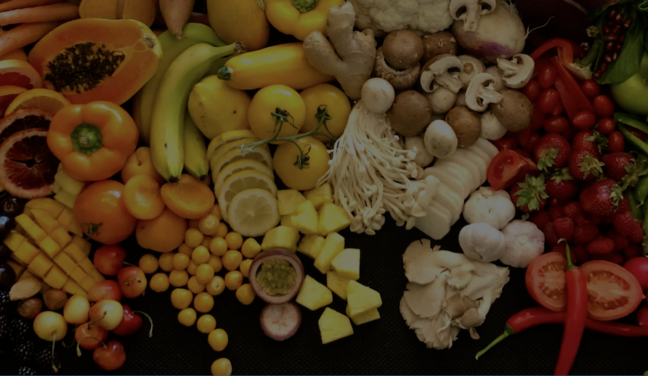
Fruits and vegetables

The Pennsylvania Alliance for Design of Open Textbooks (PA-ADOPT) is pleased to announce the immediate availability of our 22nd free and open eTextbook: The Science of Nutrition, by Dr. Heather Lehman, Associate Professor of Biology at Millersville University.

“The Science of Nutrition offers a clear and engaging introduction to the fundamental principles of nutrition. This textbook bridges evidence-based research with practical application, making it ideal for both nutrition or science majors and non-majors. Students will explore how nutrition is studied, how dietary recommendations are developed, and why these guidelines matter for health.

The book covers the full spectrum of nutrients — carbohydrates, proteins, fats, vitamins, and minerals — detailing how they are used, their roles in the body, food sources, and consequences of deficiency or excess. It also examines hydration, physical activity, and the major food groups as they relate to overall wellness. This information empowers students to make informed decisions about what they eat and why.

Whether students are planning a career in health or simply want to understand how nutrition impacts their daily lives, this book provides a solid foundation for lifelong healthy choices.”

Please help us spread the word about our books and web site to further our work to reduce costs for students, bring equity to higher education classrooms, and give faculty the flexibility to design their own learning experiences. All of our books are available to download in both ePub and PDF formats from our Bookshelf.

New book: Virology Lab Exercises for Undergraduates

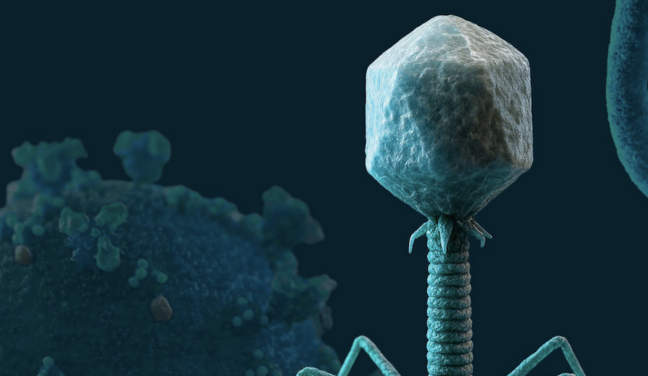
T-even phage structure with a visualization of a virus and curved DNA double helix in the background

The Pennsylvania Alliance for Design of Open Textbooks (PA-ADOPT) is pleased to announce the immediate availability of our 21st free and open eTextbook: Virology Lab Exercises for Undergraduates by Dr. Eric Ryndock, Associate Professor of Biology at Millersville University.

“This laboratory manual presents a novel series of undergraduate-friendly experiments designed to provide students with a safe, accessible, and comprehensive introduction to virology. The manual is intended for students who already possess foundational knowledge in cell biology, genetics, and molecular biology, and it emphasizes hands-on learning through diverse experimental approaches. Unlike many existing virology laboratory manuals that depend on costly infrastructure such as mammalian cell culture facilities or focus narrowly on a single viral system, this manual was developed specifically for primary undergraduate teaching institutions. The experiments utilize readily available equipment while exposing students to representative viruses that infect bacteria, plants, and animals. Through these investigations, students gain practical experience with modern virological techniques and develop transferable, employable skills relevant to biotechnology, research, and related industries. Collectively, the laboratory exercises aim to strengthen conceptual understanding of viral biology, promote technical competency, and inspire student curiosity about viruses as dynamic and influential biological entities.”

Please help us spread the word about our books and web site to further our work to reduce costs for students, bring equity to higher education classrooms, and give faculty the flexibility to design their own learning experiences. All of our books are available to download in both ePub and PDF formats from our Bookshelf.

New book: Alternatives to Agonism: Ethical Approaches to Argument in the Composition Classroom

Two people shaking hands over a table

The Pennsylvania Alliance for Design of Open Textbooks (PA-ADOPT) is pleased to announce the immediate availability of our 20th free and open eTextbook: Alternatives to Agonism: Ethical Approaches to Argument in the Composition Classroom by Dr. Kristina Fennelly, Associate Professor of English at Kutztown University.

“This textbook urges students to reconsider traditional notions of argument by inviting them to explore non-adversarial approaches to the arguments that structure their academic and every day lives.  After briefly exploring familiar aspects of the ‘argument culture’—a pervasive, warlike approach to polarizing issues—the textbook turns its attention to unearth more constructive approaches based in listening rhetoric, feminist rhetoric, Rogerian rhetoric, empathy, respect, civility, and an overall ethical treatment of argument.  Using the context of a town hall meeting, students are guided in practicing deliberation, investigation, and content analysis of arguments that play out in public social media forums.  Chapters feature class discussion exercises, sample essay assignments, and links to relevant Ted Talks, podcasts, and other multi-media sources. The textbook concludes with reflection pieces written by Kutztown University students, alumni, faculty, and staff who all seek to answer the prevailing question of this textbook: ‘What does it mean to be a worthy arguer?'”

Please help us spread the word about our books and web site to further our work to reduce costs for students, bring equity to higher education classrooms, and give faculty the flexibility to design their own learning experiences. All of our books are available to download in both ePub and PDF formats from our Bookshelf.

New book: Mycology Laboratory Manual

blurred mushrooms

The Pennsylvania Alliance for Design of Open Textbooks (PA-ADOPT) is pleased to announce the immediate availability of our 19th free and open eTextbook: Mycology Laboratory Manual by Dr. Laura Ramos-Sepulveda, Associate Professor of Biology at Millersville University.

“Mycology Laboratory Manual is an eTextbook designed for undergraduate students to introduce them to mycology. The laboratory manual provides students with foundational knowledge in mycology and hands-on experience with key concepts such as fungal hyphal and yeast growth, asexual and sexual reproduction, fungal identification using morphological and molecular tools, appreciation of mushrooms as food, and molecular transformation of fungi. The final chapter focuses on plant pathology, where students are required to apply scientific thinking to design experiments, troubleshoot, and integrate the skills they developed in the previous chapters.”

Please help us spread the word about our books and web site to further our work to reduce costs for students, bring equity to higher education classrooms, and give faculty the flexibility to design their own learning experiences. All of our books are available to download in both ePub and PDF formats from our Bookshelf.

New book: Introduction to Technical Writing: A Rhetorical Approach

Blurred circuit board

The Pennsylvania Alliance for Design of Open Textbooks (PA-ADOPT) is pleased to announce the immediate availability of our 18th free and open eTextbook: Introduction to Technical Writing: A Rhetorical Approach by Dr. Moe Folk, Professor of English at Kutztown University.

“Introduction to Technical Writing: A Rhetorical Approach is an eTextbook designed to help students learn important basic skills in technical writing and technical communication. The textbook focuses on developing practical knowledge by showing students how to apply rhetorical concepts to the process of technical writing. Each chapter provides students an in-depth look at a required skill for technical writing and examines it through a writing assignment, student sample, and rubric.This eTextbook provides images and videos to help make the concepts come alive for both students and new instructors of technical writing.”

Please help us spread the word about our books and web site to further our work to reduce costs for students, bring equity to higher education classrooms, and give faculty the flexibility to design their own learning experiences. All of our books are available to download in both ePub and PDF formats from our Bookshelf.

New book: Mi Voz. Mi Historia. Español para Estudiantes de Herencia

Blurred image of a man and woman

The Pennsylvania Alliance for Design of Open Textbooks (PA-ADOPT) is pleased to announce the immediate availability of our 17th free and open eTextbook: Mi Voz. Mi Historia. Español para Estudiantes de Herencia by Dr. Carolina Moctezuma, Assistant Professor of Modern Languages at Kutztown University.

“This book consists of both original material and a compilation of other OER activities designed to provide tools and opportunities for heritage students to explore and learn about their roots and spoken language. Together, these materials and activities target the specific language learning needs of students who grew up in a Spanish-speaking household with either their parents, grandparents, or other family. In addition to targeting oral and written language learning objectives that reflect their dialectal backgrounds, this book emphasizes cultural aspects not featured in most English or Spanish courses. Knowledge and skills in language and culture foster a positive ethnic identity for heritage students, which studies have shown lead to academic success.

The text features four units. Unit I starts by asking questions to help students develop self-awareness and comfort with their personal Spanish speaking abilities, experience in formal classroom settings, and their goals with the language. Unit II focuses on the benefits of being bilingual and appreciating one’s bilingual identity. Unit III explores the use of Spanglish, language and personal identity, and code switching. Unit IV explores the evolution of the Spanish language and the cultural and linguistic influences that have shaped this diverse and rich language.

Each unit also includes grammar topics that heritage speakers commonly struggle with in their writing, as well as sections emphasizing culture as it relates to history and identities.”

Please help us spread the word about our books and web site to further our work to reduce costs for students, bring equity to higher education classrooms, and give faculty the flexibility to design their own learning experiences. All of our books are available to download in both ePub and PDF formats from our Bookshelf.

New book: Developmental Biology Laboratory: Experiments in Classical and Experimental Embryology

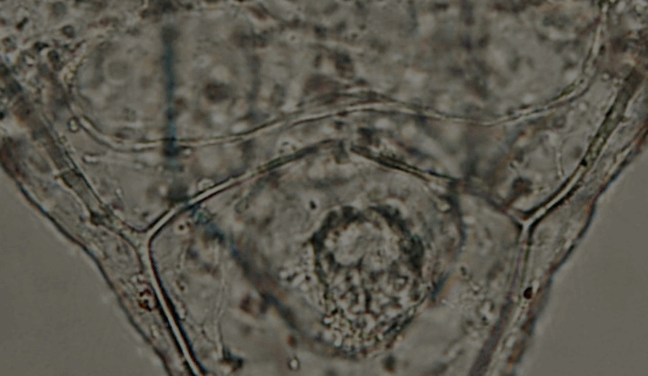
Sea Urchin Pluteus Larva

The Pennsylvania Alliance for Design of Open Textbooks (PA-ADOPT) is pleased to announce the immediate availability of our 16th free and open eTextbook: Developmental Biology Laboratory: Experiments in Classical and Experimental Embryology by Dr. Judith A. Cebra-Thomas, Associate Professor of Biology at Millersville University, and Matthew E. Smith, Graduate Student at the University of Delaware.

“This work is designed primarily for use as a laboratory manual in college-level Embryology and Developmental Biology courses and as a companion to developmental biology textbooks. It explores several model animal systems and a variety of the scientific approaches that have been used to study them. It includes both classical embryological observations and manipulations, and more modern techniques, including organ culture and the disruption of developmental processes through pharmacology. The experiments described in the lab manual are designed for 2- to 3-hour laboratory periods. The introductory protocols in each chapter can be adapted to Introductory Biology or Cell Biology courses, while the later protocols are more suited to an advanced course in Developmental Biology. The manual also includes extensive illustrations, preparation guides and appendices to aid the instructor in setting up each lab.”

Please help us spread the word about our books and web site to further our work to reduce costs for students, bring equity to higher education classrooms, and give faculty the flexibility to design their own learning experiences. All of our books are available to download in both ePub and PDF formats from our Bookshelf.

New books: General Biology Laboratory Booklet, and Human Anatomy and Physiology Laboratory Booklet

blurred cauliflower head

The Pennsylvania Alliance for Design of Open Textbooks (PA-ADOPT) is pleased to announce the immediate availability of our fourteenth and fifteenth free and open eTextbooks: General Biology Laboratory Booklet and Human Anatomy and Physiology Laboratory Booklet by Dr. Martilias Farrell, Visiting Professor of Biology at Cheyney University.

General Biology Laboratory Booklet

“This laboratory manual provides a diverse collection of experiments designed to immerse students in techniques mirroring those used in professional biomedical research. Students will explore fundamental enzyme kinetics, investigating how varying amylase concentrations and the introduction of chemical modifiers influence starch digestion rates. These labs emphasize quantitative analysis through colorimetric assays and densitometry using ImageJ software. The booklet also features studies with planaria, where students will assess how common substances affect locomotor activity and screen compounds for their impact on the remarkable regenerative abilities of these organisms, including generating concentration-effect curves. Additional activities guide students in using microscopy to observe microscopic life. Throughout these hands-on investigations, students will develop and refine crucial laboratory skills such as preparing serial dilutions, mastering precise pipetting techniques, and maintaining detailed, reproducible laboratory notebooks, thereby building a robust foundation in experimental design, data analysis, and the scientific method.”

Human Anatomy and Physiology Laboratory Booklet

“This laboratory manual presents a diverse collection of hands-on and interactive activities designed to enhance understanding of human anatomy and physiology. Students will engage with skeletal anatomy by creating and decoding messages using bone terminology with anatomical models and by performing bone measurements to analyze relationships with physical attributes. The manual delves into neuroscience by investigating the perception of binaural beats through auditory experiments and by utilizing the Neuronify simulation tool to construct and analyze neural circuits demonstrating synaptic summation. Physiological concepts are explored through experiments on respiratory rate dynamics in response to exercise and the principles of lung surfactant action. Additionally, students will apply anatomical terminology to describe dance movements. These activities collectively foster skills in data collection, critical analysis, and collaborative learning.”

Please help us spread the word about our books and web site to further our work to reduce costs for students, bring equity to higher education classrooms, and give faculty the flexibility to design their own learning experiences. All of our books are available to download in both ePub and PDF formats from our Bookshelf.

New book: Making Meaning With & Through Writing: An Approach to Research Writing

a sunset over a body of water with a hammock in the foreground

The Pennsylvania Alliance for Design of Open Textbooks (PA-ADOPT) is pleased to announce the immediate availability of our thirteenth free and open eTextbook: Making Meaning With & Through Writing: An Approach to Research Writing by Dr. Ilknur Sancak-Marusa, Assistant Professor of English at West Chester University.

“Academic writing is an act of intellectual translation which converts raw ideas into academic discourse to bridge the gap between writer and reader. However, writing is often viewed as a mechanical skill rather than an intellectual craft. This brief text reframes academic writing as a translation process that transforms complex thoughts, research findings, and abstract concepts into purposeful, persuasive writing.

Using the writing process as the foundation, each chapter aims to provide a practice to navigate the recursive nature of writing. To that end, fundamental translation principles are utilized to analyze audience needs, understand scholarly articles, synthesize and craft arguments that resonate across disciplinary boundaries.

Writing isn’t separate from thinking as it allows us to refine our ideas and share them with others in meaningful ways. Embracing this connection between writing and its impact, positions an individual as an active participant rather than a passive observer in conversations that shape disciplines and the world-at-large. This writing guide seeks to equip students with the essential tools needed to engage meaningfully in the communities they serve and soon will discover.”

Please help us spread the word about our books and web site to further our work to reduce costs for students, bring equity to higher education classrooms, and give faculty the flexibility to design their own learning experiences. All of our books are available to download in both ePub and PDF formats from our Bookshelf.